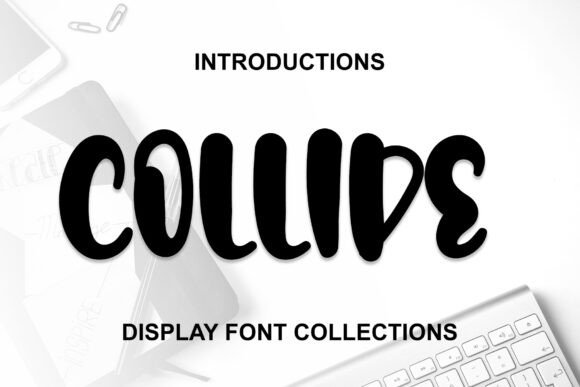
Collide Font Review: A Quirky Display Typeface for Playful Branding
I recently opened a brand board for a local children’s bookstore, and I was in search of a font that could bring the whimsy and joy the client wanted to communicate. That’s when I discovered Collide, a fun and quirky display font designed for cheerful topics. It immediately caught my eye — not just for its charm but for how it felt like it could breathe life into any design. As a brand designer who’s tested countless fonts in real-world scenarios, Collide stood out as a go-to choice for playful and colorful projects.
Collide on a Logo Draft for a Children’s Themed Brand
The first place I placed Collide was on a logo draft for the bookstore. The goal was to create something memorable and inviting, especially since the brand targets young readers and their parents. I paired Collide with a soft pastel background and some hand-drawn illustrations of animals holding books. The contrast between the clean layout and the expressive curves of Collide worked surprisingly well. It gave the logo a sense of warmth and playfulness without feeling cluttered or childish in a negative way.
In terms of visual hierarchy, Collide naturally commanded attention — perfect for a primary logo typeface. But I also had to consider legibility at different sizes. While it’s a display font, it performed admirably even in smaller applications like taglines and subheadings. Just be sure to keep the text short and impactful; it’s not ideal for long paragraphs or anything requiring fine detail.
Using Collide in Packaging Mockups and Product Labels
Next up was the packaging mockup. I used Collide on the front cover of a storybook line the client planned to launch alongside their store. The bright colors they envisioned — yellows, blues, and greens — really popped against the bold shapes of the display font. The characters were rounded and bouncy, which added an extra layer of personality to the product labels.
One thing I noticed is that Collide works best when there's enough space around each character. In tight spaces or when trying to fit too many words on a label, the quirks can start to feel overwhelming. Still, for short phrases like “Read & Grow” or “Magical Stories Inside,” it was a perfect match. The font helped establish a strong visual identity quickly, which is essential in today’s fast-moving creative market.
Collide in Social Media Layouts and Website Headers
When I moved to the website header and social media layouts, I was impressed by how versatile Collide could be. On the homepage hero section, it looked fantastic over a vibrant gradient backdrop. The playful nature of the font made the site feel approachable and engaging, which aligns perfectly with the target audience — kids and families.
On Instagram posts, where the brand needed to stand out in a sea of content, Collide brought exactly the right amount of energy. I tested it with various layouts: one with a solid color background, another with a photo overlay. Both versions worked, but I found that subtle drop shadows and outlines helped enhance its visibility without compromising its charm.
Font Pairing Suggestions with Collide
As with any display font, pairing is key. For body copy, I recommend using a simple sans serif or serif font to balance Collide’s exuberance. A clean, neutral sans like Helvetica Neue or a slightly more elegant serif such as Lora can help maintain professionalism while still letting Collide shine as the main headline or title font.
- Sans Serif Pair: Use Collide with Open Sans or Roboto for a modern, friendly look.
- Script Pair: Combine it with a delicate script like Great Vibes for added whimsy.
- Handwritten Pair: Try pairing with Dancing Script for a more personal, organic feel.
These pairings allow you to maintain a cohesive brand identity while leveraging Collide’s unique character in key spots like headlines, buttons, and call-to-action sections.
Collide for Boutique Branding and Creative Studio Identities
I also experimented with Collide on a boutique branding project for a small handmade toy company. The client wanted something that felt both artistic and accessible. Using Collide for the shop name and product titles gave the designs a lively edge. When printed on signage or tags, the font retained its clarity and appeal, which is crucial for physical retail environments.
For a creative studio identity refresh, I applied Collide to the service names like “Creative Workshops” and “Storytime Sessions.” It added a dash of originality and helped differentiate the brand from competitors who use more traditional typography. However, I avoided using it in areas like contact details or pricing — those required a more legible supporting font.
When Not to Use Collide
While Collide is excellent for specific applications, it’s important to know its limitations. This isn’t a font for body text — avoid using it in menus, brochures, or long-form content where readability is critical. Its quirky nature makes it unsuitable for formal corporate branding or legal documents. If your project needs a serious tone or requires extended text, Collide won’t be the best fit.
Also, test how it looks in all caps versus mixed case. Some display fonts struggle with all caps, but Collide handles them well. Still, I always suggest running a few variations to ensure it matches the intended message and context.
Practical Tips for Testing Collide Before Finalizing Projects
Before handing off a project to a client, I always run through a quick checklist. Here’s what I did with Collide:
- Test it in multiple file formats (OTF/TTF) across print and digital platforms.
- Apply it to different surfaces — cardboard for packaging, screens for web headers, paper for business cards.
- Try it with various color combinations to see how it reacts to gradients, overlays, and transparency effects.
- Compare it side-by-side with other display fonts to ensure it stands out and fits the brand’s voice.
This process helps confirm that Collide is the right choice and will perform consistently across all design assets.
License Check: Important for Commercial Font Use
One of the things I always remind myself and clients about is licensing. Since Collide is a commercial font, make sure to check whether it supports your intended use — especially if you're applying it to templates, merchandise, or websites. Licensing can vary depending on the platform, so it's wise to review the font’s license agreement before finalizing any work for public distribution or client deliverables.
If you’re planning to use it in a print-on-demand system like Shopify or Etsy, double-check if the font allows unlimited usage or if it’s restricted to certain quantities or purposes. You wouldn’t want to invest time and effort in a project only to hit a roadblock later due to licensing issues.
Final Observations on Collide as a Premium Display Font
After working with Collide across several design stages — from logo drafts to social media layouts — I can confidently say it’s a premium display font worth adding to your toolkit. It brings a level of creativity and cheer that’s hard to replicate with more standard options. Whether you're designing for kids, crafters, or any brand looking to inject some personality into its visuals, Collide delivers.
Its style isn’t for everyone, but for the right project, it can transform a dull concept into something unforgettable. I’ve seen it elevate bakery packaging, handmade shop identities, and even editorial spreads for kid-friendly magazines. The key is knowing when to let it take center stage and when to pull back for better balance.
If you’re considering this font for your next project, I encourage you to download it and test it yourself. Try placing it on a mockup of your own choosing — maybe a café sign or a poster for a family event. Let the design speak for itself and see if Collide resonates with your vision. And remember, always verify the licensing terms before moving forward with client work or large-scale production.