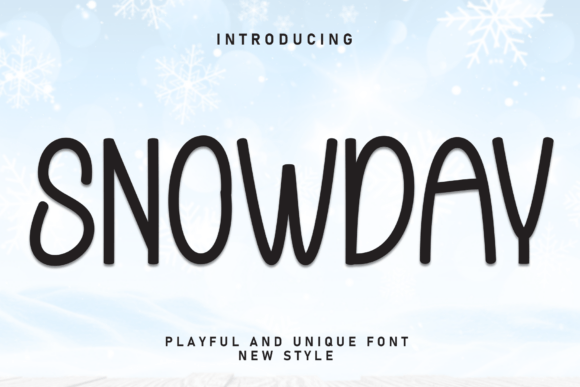
Snowday Font: A Charming Handwritten Typeface for Creative Designers
I recently found myself staring at a blank brand board, tasked with creating a visual identity for a cozy local café. The client wanted something warm, inviting, and unique—something that felt like it came straight from the heart of the community they served. I was browsing through some display fonts when Snowday caught my eye. Its description promised a sweet and amiable handwritten style, brimming with a friendly air. As a designer who’s always on the lookout for typefaces that add personality without sacrificing professionalism, I decided to give it a test run.
Using Snowday in Logo Design for a Local Café
The first thing I did was try Snowday in the logo concept. I paired it with a simple illustration of a snowflake and a steaming cup of coffee. The font immediately brought a sense of charm and approachability to the design. It wasn’t just legible—it smiled. That’s what you want in a logo for a small business: a character that feels personal and genuine. Snowday fit perfectly here, especially because it’s a display font, which means it shines best in headlines and short-form text where attention is key.
What stood out to me was how the strokes of each letter flowed naturally, almost like a handwritten note left on a windowsill after a fresh snowfall. This kind of warmth is exactly what a local café needs to communicate comfort and familiarity. The subtle inconsistencies in the letters gave it an artisanal feel, perfect for handcrafted branding elements.
Snowday in Brand Identity Mockups
Next, I moved into building out the full brand identity. For packaging mockups, Snowday worked wonders on signage and label stickers. It added that whimsical touch that made the brand feel more personable. On product labels for mugs and pastries, the font helped differentiate the items as part of a curated experience rather than mass-produced goods. Even though it's not ideal for long paragraphs, its role as an accent or supporting typeface in brand materials was undeniable.
I also used it in social media templates. One Instagram post promoting their seasonal winter latte featured the name “Snowday” in the headline. The font immediately evoked a sense of fun and festivity, aligning well with the imagery of falling snow and hot drinks. The mood it set was enchanting—just like the product description suggested. It wasn’t overpowering but still memorable, making it a great choice for any project looking to stand out while staying true to a softer, more human aesthetic.
Font Pairing Tips with Snowday
One challenge with any handwritten display font is finding the right companion to balance it. In this case, I paired Snowday with a clean sans serif font for body copy. The contrast between the two created a strong visual hierarchy, letting the Snowday headline pop while ensuring the rest of the content remained easy to read. If you're working with editorial design or web headers, this pairing strategy can help maintain both creativity and clarity.
I also experimented with combining Snowday with a light serif font for printed marketing materials like flyers and posters. The serif grounded the playful nature of the display font, adding a touch of sophistication. This balance made the designs feel more mature yet still approachable, which is essential if your audience includes both young creatives and older locals.
Testing Snowday for Readability and Recognition
Before finalizing anything, I tested Snowday across various platforms. I placed it on a shop sign mockup and saw how it looked from a distance. It was bold enough to be seen clearly but not too exaggerated that it lost its charm. Then I checked how it rendered on a business card—again, it held up nicely in smaller sizes due to its open apertures and clear structure.
I also evaluated it for use in website headers. While it performed well there, I noted that it should only be used sparingly for short-form text. Since it’s a handwritten display font, it doesn’t suit dense blocks of text. But for titles, headings, and taglines, it was a dream to work with. What I liked most was how it helped build brand recognition quickly. The unique curves and flourishes are instantly identifiable, so once it’s established in the brand system, people start associating that friendliness with the business itself.
Commercial Use and Licensing Considerations
When considering commercial design assets, it’s important to check licensing details. Snowday, being a premium font, offers flexibility for use in print and digital formats. The included file formats were standard—TTF and OTF—which made it easy to integrate into different software. There were no missing characters or issues with multilingual support, which is a relief when working with diverse audiences or international clients.
I also appreciated the presence of alternates and ligatures. These little touches allowed for creative variation in the brand visuals, keeping things fresh while maintaining consistency. Whether it was swapping in a slightly different ‘S’ or using a stylized ‘&’, these options gave the project a bit more soul without overcomplicating the process.
Snowday in Product Labels and Merchandise
Another area where Snowday really shone was in product labeling. The café had a line of branded merchandise, including reusable cups and aprons. Using Snowday for the main title on these items gave them a handmade look that aligned with the café’s values. It felt like a signature—a personal stamp of quality and care.
I even used it for custom illustrations, like a hand-drawn menu header and a poster for a weekend event. The font blended seamlessly with watercolor textures and minimal line art. It didn’t compete with the other design elements but instead enhanced them by bringing a sense of authenticity. That’s a rare trait in a display font and one that makes Snowday particularly versatile for creative studios and independent designers alike.
Practical Advice for Real Projects
If you’re thinking about using Snowday in your next branding project, here are a few practical tips based on my experience:
- Test it in context: Before locking in your brand system, apply Snowday to a variety of surfaces—shop signs, business cards, website headers—to see how it holds up in real-world scenarios.
- Use it as a headline or accent font: Remember, Snowday is a display font. It’s meant to make an impression in short bursts. Avoid using it for large bodies of text unless you’re going for a specific artistic effect.
- Balance with simpler styles: Pair it with a clean sans serif or minimalist serif font to create a harmonious layout. This ensures your message stays readable while still feeling stylish.
- Check the licensing: Make sure the font allows for the specific uses you have in mind—especially if you’re designing for a product-based business or commercial project.
Why Snowday Feels Right for Modern Typography Needs
In today’s design landscape, many brands are moving away from overly formal typography and toward more expressive, human-centered styles. Snowday taps into that trend perfectly. It’s not trying to be serious or corporate—it’s embracing the joy of handwriting and translating it into a modern typeface that works for both digital and print. It gives your brand a voice, literally and visually.
As I refined the café’s brand assets, I noticed how Snowday subtly influenced the overall perception. People responded to the friendliness of the type, and the brand started to feel more welcoming and authentic. That’s powerful stuff. And it all came down to choosing the right font for the right job.
Designing with Personality in Mind
Handwritten fonts often carry a risk of being too informal or hard to read. Snowday avoids that pitfall by maintaining a delicate balance between playfulness and professionalism. Each character feels intentional, yet spontaneous. That duality is what makes it work so well in brand identities where you want to evoke emotion without losing clarity.
I’ve since used Snowday in a couple of other projects—like a boutique skincare brand and a craft beer label—and each time it brought a similar sense of charm. It’s not for every brand, of course. If your project requires a sleek, high-tech look, Snowday might not be the right fit. But for businesses that thrive on warmth, nostalgia, and a personal touch, it’s an excellent choice.
Snowday as Part of a Thoughtful Brand System
Creating a brand isn’t just about picking a pretty font. It’s about building a consistent language that speaks to your audience. Snowday fits into that language beautifully when used correctly. I applied it to the café’s homepage hero section and watched how it interacted with the background image and supporting text. It didn’t clash—it complemented everything, drawing the eye in a natural way.
What I loved most was how it helped establish a tone. The café’s target audience was mostly young professionals and families looking for a comfortable place to gather. Snowday, with its sweet and amiable vibe, resonated well with that demographic. It communicated the idea that this was a space where you could relax and enjoy the moment—just like the font does on the page.
Final Thoughts on Real-World Application
After several weeks of testing and refining, the brand launched successfully. The client was thrilled with how Snowday contributed to the visual identity, especially in helping them stand out from more generic competitors. It’s rare to find a display font that feels both professional and personal, but Snowday managed to do just that.
For anyone exploring new fonts for their design toolkit, I’d highly recommend giving Snowday a try. It’s not just another typeface—it’s a tool that helps bring personality to your work. Whether you’re designing for a small business or a creative studio, the right font can make all the difference. And in this case, Snowday made the right impression.