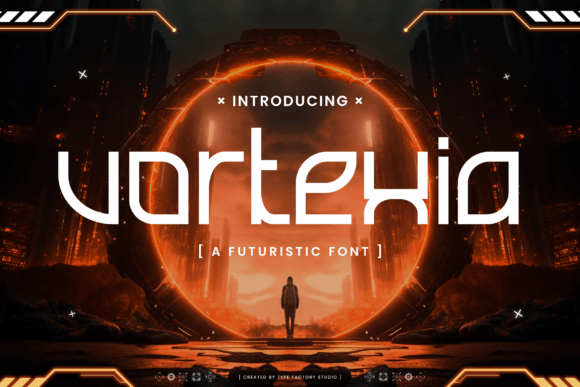
Vortexia Font for Modern Web Design Projects
As a web designer, I'm always on the lookout for fonts that elevate digital layouts without compromising readability. Recently, I tested Vortexia, a futuristic display font with sleek lines and geometric shapes. The goal was to see how it would perform in a real-world project — a tech startup's product landing page. Within minutes of importing it into my design tool, I could tell this typeface had something special going for it.
Vortexia in Product Landing Page Headlines
I started by placing Vortexia in the hero headline above an image banner showcasing the company’s latest app. It immediately added a sense of innovation and modernity, exactly what the brand needed. Unlike some display fonts that can feel too flashy or unreadable at smaller sizes, Vortexia retained clarity even when I scaled it down for mobile previews. Its sharp angles and clean curves made it stand out against both light and dark backgrounds, giving the layout a polished, high-tech edge.
What I noticed most was how it helped establish visual hierarchy. When paired with a simple sans serif body font like Inter or Lato, the contrast between the two was striking but balanced. Users' eyes naturally gravitated toward the headlines first, which is crucial for guiding attention on a landing page. This kind of typography plays a big role in building brand trust — especially for SaaS startups or any digital product aiming to look professional and forward-thinking.
Vortexia for Logo Text and Branding Elements
Next, I used Vortexia for the logo text at the top of the page. It wasn’t just about aesthetics; the font felt like a natural extension of the brand’s identity. The geometric style gave the logo a futuristic vibe while still maintaining enough structure to be legible from a distance. For online branding elements like navigation menus and call-to-action buttons, I stuck with lighter weights and narrower variants to keep the design cohesive across the board.
One thing I recommend when using Vortexia for logo text is to ensure you have access to multiple weights and alternates. This helps maintain consistency throughout your site’s design assets, whether it's headers, subheaders, or promotional banners. If you're building a digital brand kit, having these options available makes a huge difference in creating a unified visual language.
Using Vortexia in Creative Portfolio Sites
I also tried Vortexia on a creative portfolio homepage for a UX designer client. In this context, the font worked surprisingly well. The portfolio featured bold, artistic visuals, and the angular nature of Vortexia complemented the overall design. I found it particularly effective for section headings and project titles. It didn’t distract from the content but instead acted as a visual anchor, helping users scan through the site more efficiently.
For portfolio sites, I often suggest using a strong display font like Vortexia sparingly — mostly for headers and decorative accents. Too much of it can overwhelm the layout, especially if the supporting typography isn’t carefully chosen. But when used right, it adds a unique personality that sets the site apart from the usual Helvetica and Roboto-heavy portfolios.
Vortexia on Boutique Online Store Banners
On another project — a boutique online store selling smart home accessories — I placed Vortexia in a rotating banner for seasonal promotions. The font’s futuristic appeal aligned perfectly with the store’s niche, and it caught the eye without being too aggressive. I experimented with its use over images and found that it read clearly even when layered on complex visuals. That’s a rare quality in display fonts, and it made me appreciate how versatile Vortexia can be in different contexts.
When using Vortexia on e-commerce sites, I’d advise checking its performance on small buttons and mobile screens. While it looks great in large formats, some weights might not scale down as elegantly. But for main banners and category headers, it’s a solid choice that enhances the overall user experience by reinforcing the brand’s digital-forward aesthetic.
How Vortexia Works with Dark Mode and Responsive Layouts
Dark mode is becoming standard for many websites and apps, so I wanted to test how Vortexia performed under those conditions. Surprisingly, the font maintained its crispness and contrast on dark backgrounds, making it ideal for modern UI designs where dark themes are common. I also previewed the layout on various screen sizes and was impressed by how responsive it remained. There were no strange spacing issues or character distortion — signs of a well-crafted display font.
Fast-loading visual content is another priority in today’s web design landscape. Vortexia comes in optimized webfont formats, which means it loads quickly and renders smoothly across devices. For designers working on performance-driven projects, that’s a major plus. No need to worry about bloated files slowing down your site — just a clean, modern display font that works hard behind the scenes too.
Font Pairing Strategies with Vortexia
Pairing a display font like Vortexia with a complementary body font is essential for good typography. I leaned into a minimalist approach by pairing it with a clean sans serif for paragraphs and a slightly heavier version for subheadings. This created a clear typographic rhythm that improved scanning behavior and kept the design from feeling cluttered.
If the brand wanted to add a bit more warmth or editorial tone, I considered using a softer serif font alongside it for blog headers or testimonials. But since Vortexia already has such a strong visual presence, I stuck with neutral sans serifs to let the message shine through. The key is to balance the boldness of the display font with something understated in the background — ensuring that the content remains accessible and easy to digest.
Vortexia for Branded Web Content and Campaign Pages
In campaign landing pages, I’ve found that Vortexia can help create a sense of urgency and excitement. I applied it to headlines promoting a new product launch and saw how it amplified the energy of the page. The font’s modern edge supported the campaign’s digital-first messaging, and its geometric precision gave the layout a professional finish.
For branded web content like infographics or social media graphics, I used Vortexia for title text and data highlights. It worked well in short phrases and bullet points, especially when we needed to emphasize key stats or features. However, I avoided using it for long-form content or captions, where legibility and ease of reading take precedence over stylistic flair.
Vortexia in Course Sales Pages and Digital Ads
Course creators and marketers looking for a premium font that speaks to innovation will find Vortexia useful. On a course sales page I was designing, the font added a layer of sophistication to the headline and helped position the offering as cutting-edge and expert-led. I also used it in digital ads for the same project, where space was limited and impact mattered. The result? A strong visual hook that stood out in feeds without sacrificing clarity.
It’s important to note that while Vortexia is excellent for display purposes, it shouldn’t be the only font in your system. Using it for CTA buttons or promotional tags can reinforce the brand’s digital identity, but always pair it with a more functional font for body copy. This ensures your audience can focus on the message without getting lost in the typography.
Checking Vortexia’s File Formats and Licensing
Before finalizing the font for client projects, I reviewed the included styles, file formats, and licensing terms. Vortexia offered several weights and styles, which gave me flexibility in how I deployed it across different sections of the website. As a commercial font, it came with clear licensing details — something I always double-check before integrating it into production environments.
Having access to webfont versions is a big win for developers. It means the font integrates seamlessly into CSS without the need for heavy downloads or custom rendering solutions. And with multilingual support, it’s a great option for international brands or designers who work with global audiences.
Final Thoughts on Typography Choices and Brand Consistency
After testing Vortexia across several digital projects, I’m confident it’s a powerful addition to any web designer’s toolkit. Whether you're crafting a technology-related landing page, redesigning a blog header, or building a digital brand kit, this display font brings a level of professionalism and creativity that’s hard to ignore.
But remember, choosing the right font is only part of the equation. You also need to consider how it aligns with your brand’s voice, how it behaves on different platforms, and how it supports your overall user experience goals. Vortexia checks all these boxes — and then some.
If you're looking for a display font that embodies innovation and modernity without falling into the trap of being overly trendy, give Vortexia a try. Test it in your next project, observe how it affects engagement and readability, and decide for yourself whether it’s the perfect fit for your digital brand identity.